ADVERTISEMENT
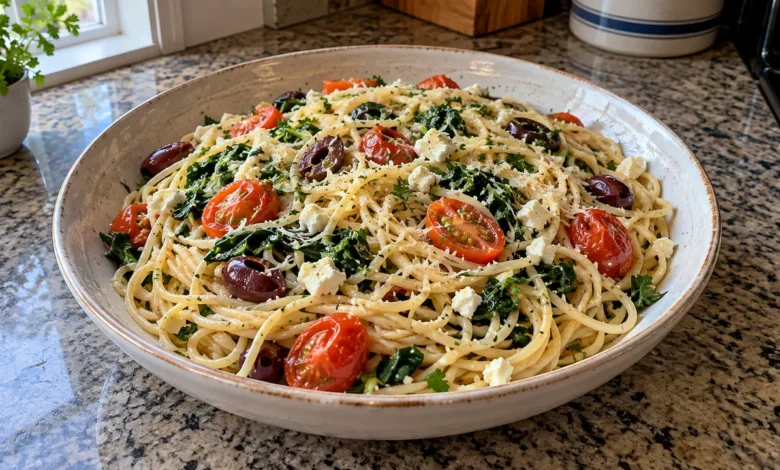
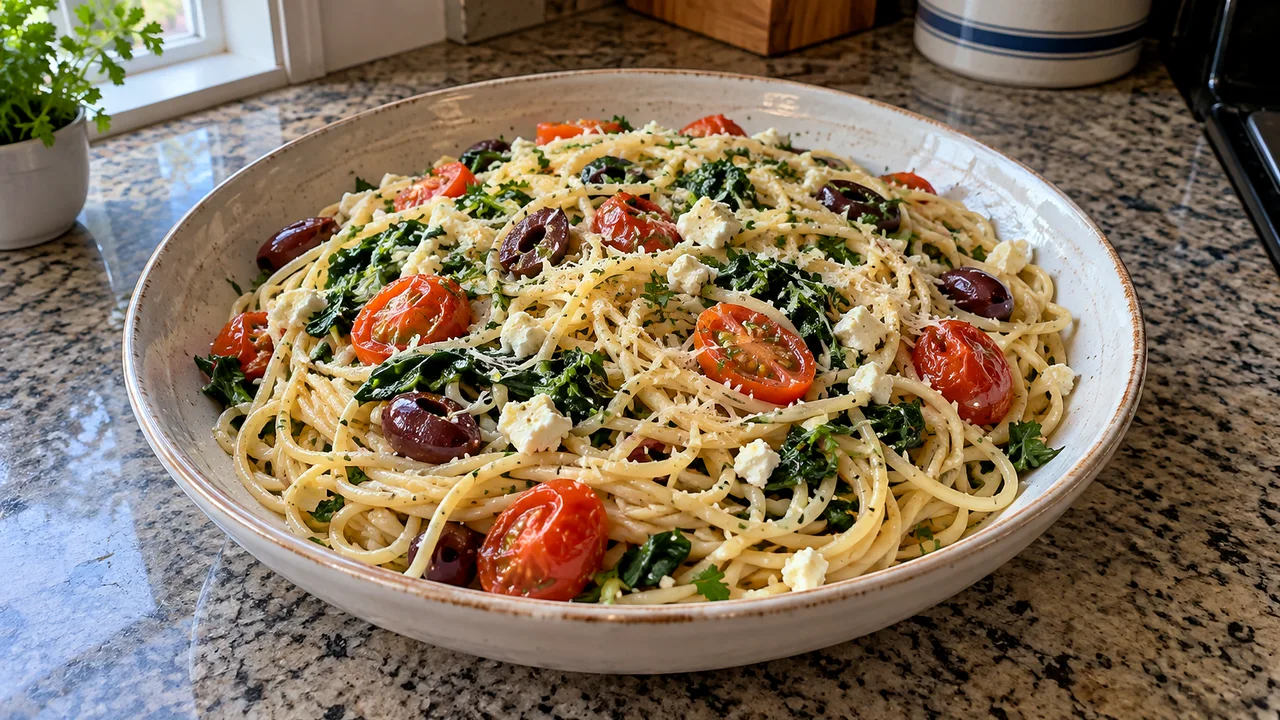
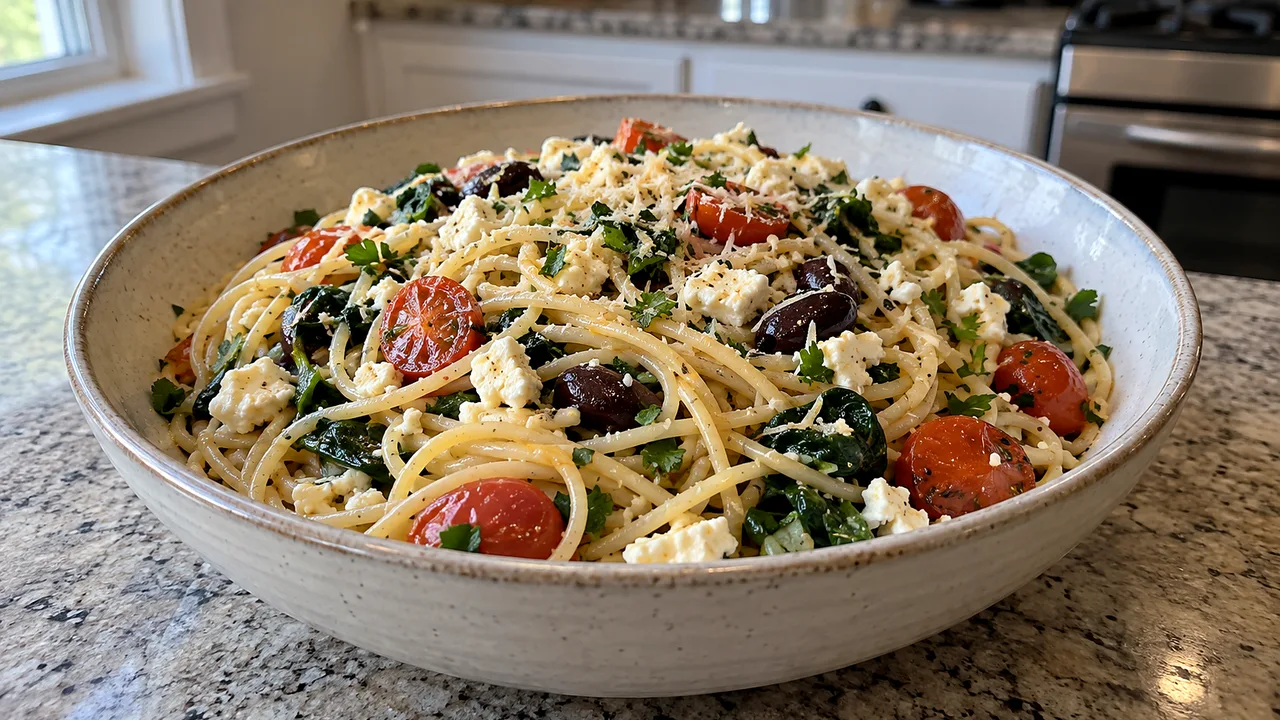
This Mediterranean lemon pasta is spaghetti tossed in a light, glossy sauce of extra-virgin olive oil, gently cooked garlic, fresh lemon zest and juice, a little butter, and starchy pasta water. Softened cherry tomatoes, wilted baby spinach, Kalamata olives, feta, Parmesan, and parsley make it a full meal rather than a plain lemon noodle. There is no cream: the pasta water does the binding.
It serves 4 as a main dish or 6 as a lighter plate. Plan on about 15 minutes of prep and about 20 minutes of cooking, including bringing the pasta water to a boil, for roughly 35 minutes total.
What Makes This Lemon Pasta Mediterranean
Plenty of lemon pastas stop at butter, cheese, and lemon. This one leans on olive oil instead of cream and adds the ingredients you find across Greek and southern Italian home cooking: briny Kalamata olives, salty crumbled feta, sweet cherry tomatoes, oregano, and a pinch of red pepper flakes. If you want the rich, silky version, our creamy lemon pasta with Parmesan uses heavy cream and is a different dish. For a minimalist tomato-only olive oil pasta, see the 6-ingredient angel hair tomato pasta.
Why You Don’t Need Heavy Cream
Pasta cooking water is full of starch. When you toss hot pasta with olive oil, a tablespoon of butter, and a splash of that water, the starch helps the fat and water hold together as a thin, slightly cloudy sauce that clings to each strand. It is lighter than cream sauce and lets the lemon taste bright instead of muted.
ADVERTISEMENT
Spaghetti or Linguine?
Either works. Spaghetti is round and easy to find; linguine is flatter and holds a little more sauce on its surface. Use whichever you have, and cook it about 1 minute short of the package’s al dente time because it finishes in the skillet. Twelve ounces of dry pasta is about 3 ounces per person for 4 main-course servings, or 2 ounces each for 6 lighter servings, before the vegetables and cheese are added.
Olive Oil and Garlic
The olive oil is the base of the sauce, so use an extra-virgin oil you like the taste of. Slice the garlic thin and evenly so it cooks at the same rate. Start it over medium-low to medium heat and stir for about 1 minute, until it smells fragrant and the edges are only pale gold. If it starts to brown fast, pull the pan off the burner for a few seconds. Dark brown garlic tastes bitter and there is no fixing it later.
Lemon Zest vs Lemon Juice
Zest carries the lemon’s aromatic oils, giving fragrance without much sourness. Juice brings the sharp acidity. The zest of 2 lemons plus 1/4 cup juice is a bold, clearly lemony amount for 12 ounces of pasta, balanced by the oil, butter, cheese, and olives. Heat dulls fresh juice quickly, so in this version it goes in at the end of the toss over low heat (or right after you take the pan off the burner) instead of simmering at medium. If you prefer it milder, start with 3 tablespoons and add the rest after tasting.
Cherry Tomatoes, Spinach, and Olives
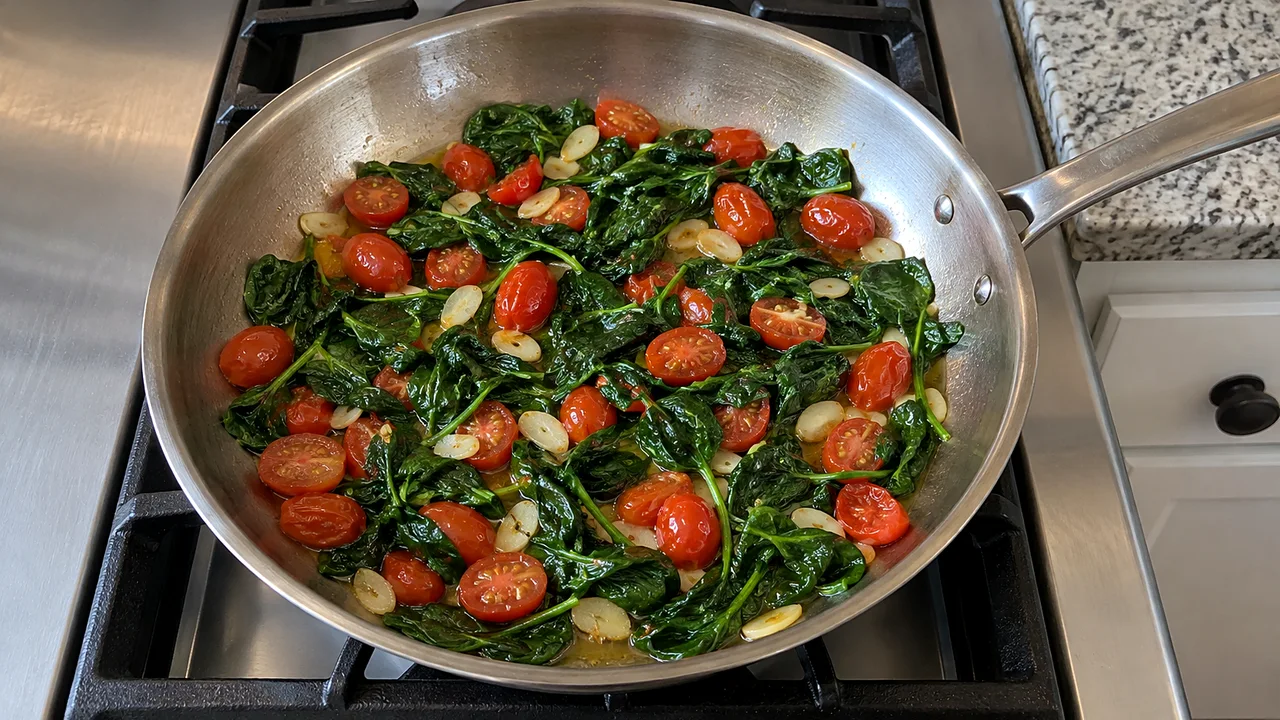
Cherry tomatoes cook just about 3 minutes, enough for the cut sides to soften and release a little juice while the halves still hold their shape. Baby spinach looks like a lot raw, but 5 ounces collapses within about a minute. Add it in two handfuls if your skillet is crowded; stop as soon as it wilts so it does not release a puddle of water. Kalamata olives are added off heat; they bring a savory, briny depth and a good amount of salt.
Feta and Parmesan
Parmesan, grated finely from a block, melts into the sauce and adds savory body. Feta stays in soft crumbles that give little salty, tangy bites. Both go in off the heat: direct high heat makes Parmesan clump into strings and makes feta weep and turn grainy. Half the feta is folded through, and the rest goes on top so you can see and taste it.
ADVERTISEMENT
Ingredient Notes and Substitutions
- Pasta: 12 ounces spaghetti or linguine. Other long strands such as bucatini work; keep the weight the same.
- Extra-virgin olive oil: 1/3 cup. This is the main fat; most of it becomes the sauce once emulsified.
- Butter: 1 tablespoon unsalted, which helps the sauce turn glossy. You can replace it with 1 more tablespoon olive oil; the sauce will be slightly less creamy-looking.
- Lemons: 2 lemons for zest; their juice usually yields close to 1/4 cup. Bottled juice tastes flat here, so use fresh.
- Tomatoes: 1 pint cherry or grape tomatoes, halved.
- Spinach: 5 ounces baby spinach. Chopped mature spinach works if you remove the thick stems.
- Olives: 1/2 cup pitted Kalamata, halved. Other brined black olives work but are milder.
- Cheeses: 3/4 cup crumbled feta and 1/3 cup freshly grated Parmesan.
- Herbs and spice: 1/4 cup chopped parsley, 1/2 teaspoon dried oregano, 1/4 teaspoon red pepper flakes (reduce or skip for less heat).
How to Make Mediterranean Lemon Pasta
Prep first, then boil the pasta
While a large pot of water comes to a boil, slice the garlic, halve the tomatoes and olives, zest and juice the lemons, chop the parsley, and grate the Parmesan. Salt the water well, but a little less aggressively than usual, since the olives and two cheeses add plenty of salt. Cook the spaghetti until just shy of al dente. Before draining, scoop out 1 cup of the pasta water.
Cook the garlic and tomatoes
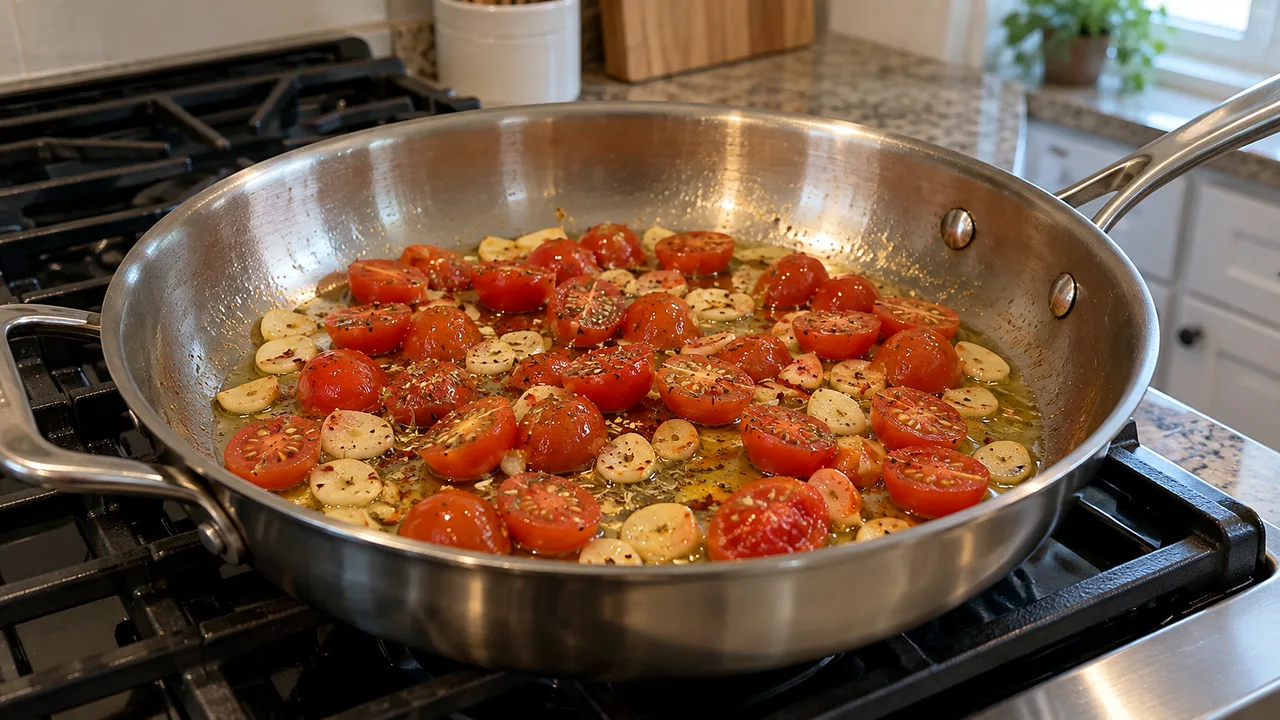
While the pasta cooks, warm the olive oil in a large 12-inch skillet over medium-low to medium heat. Add the sliced garlic and stir for about 1 minute, until fragrant and only pale gold. Add the tomatoes, oregano, and red pepper flakes and cook about 3 minutes, until the tomatoes soften at the edges but keep their shape.
Wilt the spinach
Add the spinach and stir for about 1 minute, just until it wilts.
Toss the pasta into a glossy sauce
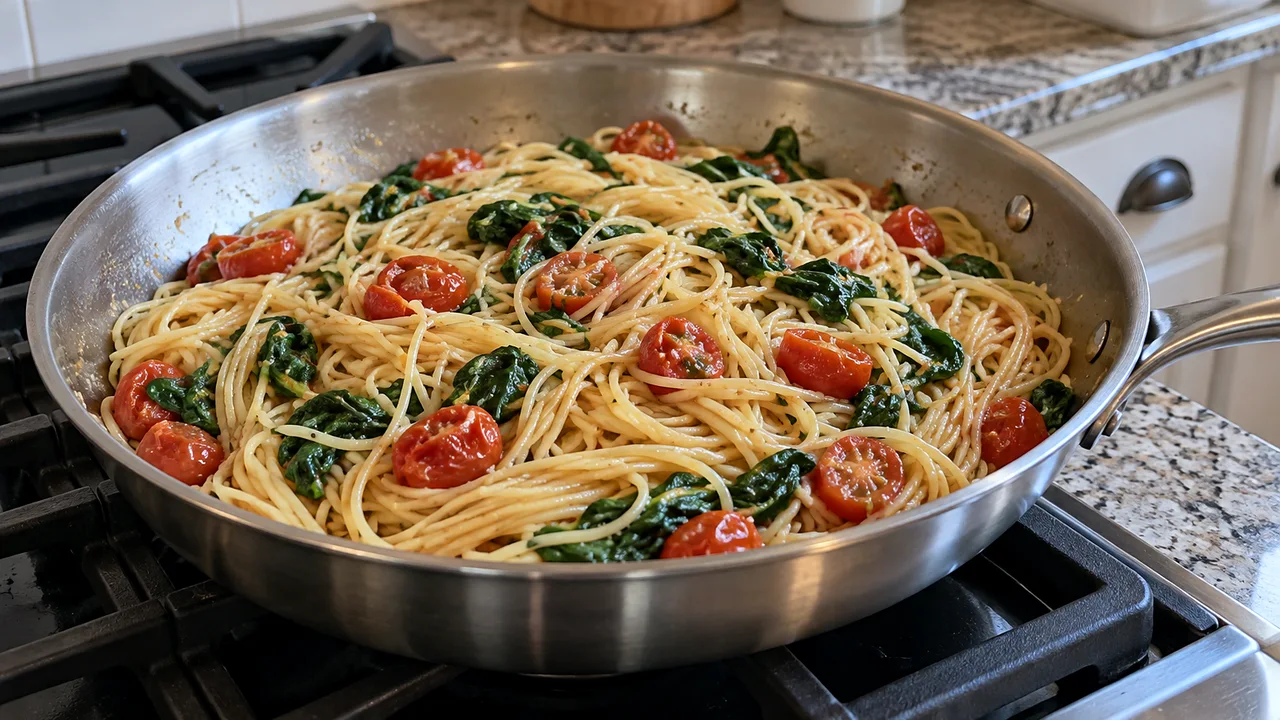
Add the drained pasta, butter, lemon zest, and 1/2 cup of the reserved pasta water. Toss constantly with tongs over medium heat for 1 to 2 minutes; the liquid will turn slightly cloudy and coat the strands instead of pooling. Lower the heat (or slide the pan off the burner), add the lemon juice, and toss a few seconds more. If it looks dry or tight, add more pasta water a splash at a time.
Finish off the heat
Remove the skillet from the heat. Fold in the olives, Parmesan, and half the feta. Now taste, and only then add salt and black pepper. Top with the remaining feta and the parsley and serve right away while warm.
ADVERTISEMENT
Tips for a Light, Balanced Sauce
- Avoid oily pasta: Toss vigorously with the pasta water so the oil emulsifies. A pool of clear oil means it needs another splash of pasta water and more tossing.
- Avoid a watery sauce: Add pasta water gradually, don’t overcook the spinach, and don’t let the pasta sit wet in the colander.
- Balance the lemon: Too sharp? Add a little more Parmesan or a drizzle of oil. Too flat? Add more zest first, then juice.
- Avoid salty pasta: Olives, feta, Parmesan, and pasta water all add salt. Season only at the end, after the cheeses and olives are in.
- Prevent cheese clumping: Grate Parmesan finely, take the pan off heat first, and toss with a splash of pasta water.
Serving, Make-Ahead, and Storage
This pasta is best served right away, when the sauce is glossy and the spinach is bright. To get ahead, prep the garlic, tomatoes, olives, lemon, parsley, and cheese up to a day ahead and refrigerate them separately; cook the pasta and sauce just before eating.
- Refrigerate: Cool leftovers and refrigerate in an airtight container within 2 hours of cooking. Eat within 3 to 4 days.
- Reheat: Warm in a skillet over low heat with 1 to 2 tablespoons of water, tossing until hot, or microwave covered in short bursts, stirring between. Gentle heat keeps the sauce from turning oily and the cheese from clumping. Brighten with a squeeze of fresh lemon.
- Meal prep: It works for lunches, but expect the pasta to absorb the sauce and the spinach to darken. A splash of water and fresh lemon when reheating helps. It’s also fine eaten at room temperature, like a pasta salad.
- Freezing: Not recommended; the spinach, tomatoes, and feta turn watery.
Troubleshooting
- Bitter taste: The garlic browned. Next time lower the heat and pull the pan off sooner.
- Sauce disappeared: The pasta absorbed it. Add a splash of pasta water and toss.
- Stringy cheese: The pan was too hot. Let it cool for a few seconds before adding Parmesan.
- Mushy tomatoes: They cooked too long or too hot. Three minutes is enough.
- Bland: Add more lemon zest, a pinch of salt, and black pepper after tasting.
More Mediterranean-Style Recipes
Serve the pasta with a classic Greek salad, or try the Mediterranean orzo salad for a cold option. For a protein main with similar flavors, see Mediterranean chicken. Browse more weeknight ideas in our dinner category.
Mediterranean Lemon Pasta FAQs
Is this pasta vegetarian? It contains no meat or seafood, but traditional Parmesan (Parmigiano-Reggiano) is made with animal rennet, and some feta is too. If you need a vegetarian dish, choose cheeses labeled vegetarian or made with microbial rennet.
Is it vegan? No. It contains butter, feta, and Parmesan.
Can I add the lemon juice at the beginning? You can, but long cooking dulls its fresh flavor. Adding it at the end over low heat or off heat keeps it bright.
ADVERTISEMENT
Can I make it gluten-free? Use a gluten-free spaghetti and cook it carefully; it can turn soft faster, so start checking early, and use its cooking water for the sauce.
How much does it serve? Four generous main portions or six lighter servings or sides.
Recipe Card
Mediterranean Lemon Pasta
Spaghetti in a light olive oil, lemon, butter, and pasta-water sauce with cherry tomatoes, baby spinach, Kalamata olives, feta, Parmesan, and parsley. No cream.
Prep: 15 minutes | Cook: 20 minutes | Total: 35 minutes | Yield: 4 to 6 servings | Category: Dinner | Cuisine: Mediterranean
Equipment: Large pot, colander, 12-inch stainless-steel skillet, tongs, zester or rasp grater, cutting board, knife
Ingredients
- 12 ounces spaghetti or linguine
- Salt, for the pasta water
- 1/3 cup extra-virgin olive oil
- 4 garlic cloves, thinly sliced
- 1 pint cherry tomatoes, halved
- 1/2 teaspoon dried oregano
- 1/4 teaspoon red pepper flakes
- 5 ounces baby spinach
- 1 tablespoon unsalted butter
- Zest of 2 lemons
- 1/4 cup fresh lemon juice
- 1/2 cup pitted Kalamata olives, halved
- 1/3 cup freshly grated Parmesan cheese
- 3/4 cup crumbled feta cheese, divided
- 1/4 cup chopped fresh parsley
- Black pepper, to taste
Instructions
- Prep and boil: Bring a large pot of well-salted water to a boil. Meanwhile slice the garlic, halve the tomatoes and olives, zest and juice the lemons, chop the parsley, and grate the Parmesan.
- Cook the pasta: Cook the pasta until just shy of al dente. Reserve 1 cup pasta water, then drain.
- Cook garlic: While the pasta cooks, warm the olive oil in a large skillet over medium-low to medium heat. Add garlic and cook about 1 minute, until fragrant and pale gold, not brown.
- Soften tomatoes: Add tomatoes, oregano, and red pepper flakes. Cook about 3 minutes, until the tomatoes soften but keep their shape.
- Wilt spinach: Add spinach and cook about 1 minute, just until wilted.
- Toss the sauce: Add pasta, butter, lemon zest, and 1/2 cup pasta water. Toss over medium heat 1 to 2 minutes until glossy. Reduce heat to low, add lemon juice, and toss briefly, adding more pasta water if needed.
- Finish off heat: Remove from heat. Fold in olives, Parmesan, and half the feta. Taste, then season with salt and black pepper.
- Serve: Top with remaining feta and parsley. Serve warm right away.
Notes
- Cook time includes bringing the pasta water to a boil; the sauce cooks while the pasta boils.
- Lemon juice goes in at low heat at the end to keep it bright. Start with 3 tablespoons if you prefer milder acidity.
- Olives, feta, Parmesan, and salted pasta water are all salty, so season only at the end.
- Add cheeses off heat to prevent clumping.
- Contains dairy; not vegan. Vegetarian only if your Parmesan and feta use vegetarian rennet.
- No physical kitchen testing was performed for this write-up.
Storage
- Refrigerate in an airtight container within 2 hours; eat within 3 to 4 days.
- Reheat gently in a skillet over low heat with 1 to 2 tablespoons water, or microwave covered in short bursts.
- Pasta absorbs sauce in the fridge; refresh with water and lemon. Freezing not recommended.