ADVERTISEMENT
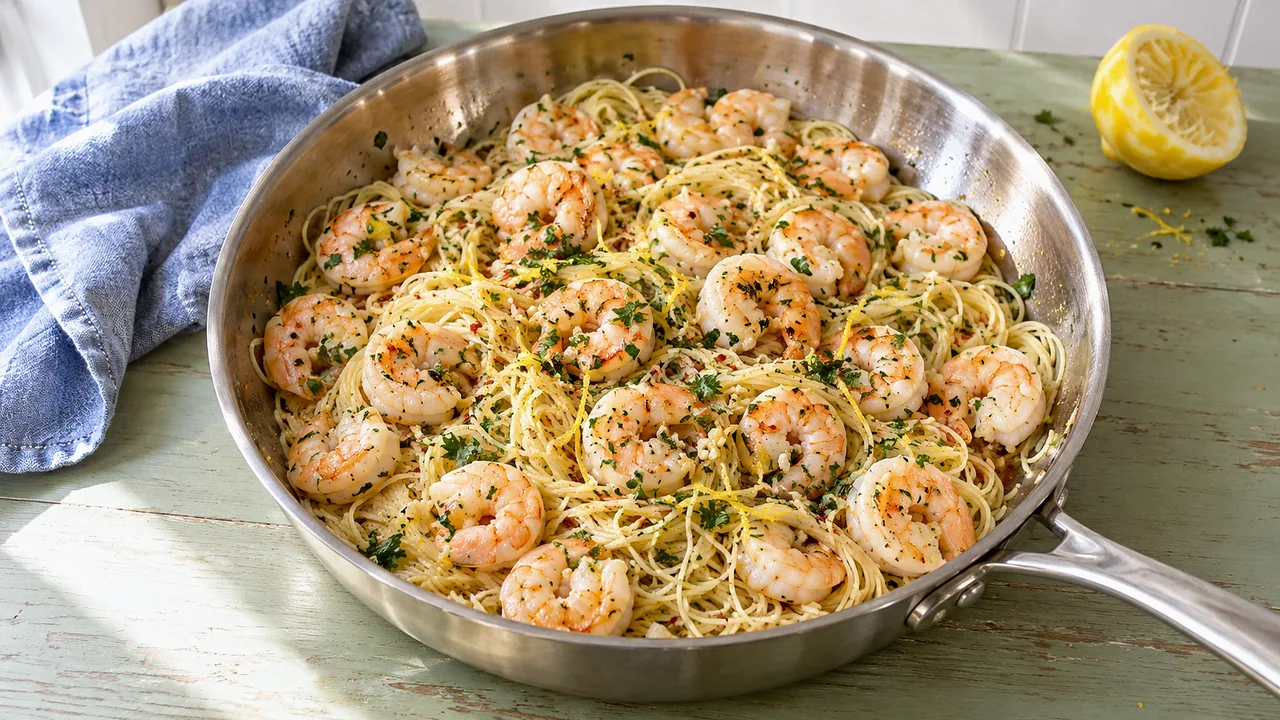
Shrimp scampi, as most American restaurants and home cooks make it, is shrimp cooked with garlic, butter, white wine, and lemon. The name comes from Italian: scampi are langoustines, small lobster-like shellfish. Italian-American cooks used the name for shrimp cooked in a similar garlicky way, and it stuck. In this version, the shrimp are tossed with angel hair pasta in a light pan sauce of reduced wine, butter, lemon zest and juice, and starchy pasta water, stirred until it turns glossy and clings to the thin strands. There’s no cream and no cheese.
Angel hair cooks in about 3 minutes, so the shrimp and the wine reduction are made while the pasta water heats, and the pasta goes in the pot last. That way it goes from the pot to the skillet without sitting and clumping. Plan on about 35 minutes, start to finish, for 6 servings.
Ingredient Notes
The full quantities are in the recipe card below. These ingredients make the biggest difference to the sauce and the shrimp.
- Shrimp: Buy by count rather than by name, because “large” and “jumbo” mean different sizes at different stores. Look for 21/25 or 26/30 count per pound. A pound and a half gives each person 5 to 7 shrimp, and shrimp that size sear without overcooking as fast as smaller ones. Buy them raw, peeled, and deveined. Tail-off shrimp are easier to eat with pasta. Pat them very dry, or they’ll steam instead of sear.
- Angel hair pasta: Also sold as capellini, it’s the thinnest common long pasta and is usually al dente in 3 to 4 minutes. Check your package, because it finishes cooking in the skillet.
- Dry white wine: Use a crisp, unoaked white you’d be happy to drink, such as Pinot Grigio or Sauvignon Blanc. Skip oaky Chardonnay and sweet wines like Moscato or sweet Riesling. Oak and sugar both concentrate as the wine reduces, and they can make the sauce taste heavy or sweet. A few minutes of simmering doesn’t remove all of the alcohol. If you’re avoiding alcohol, use the broth swap in the FAQ below.
- Butter and olive oil: The oil keeps the butter from scorching while the shrimp sear. The 3 tablespoons of butter that go in at the end become the body of the sauce. Use unsalted butter so you control the salt.
- Lemon: Zest the lemon before you juice it. The zest adds lemon aroma without making the sauce more sour. One large lemon usually gives the 3 tablespoons of juice you need.
- Pasta water: The starch in the cooking water is what holds the butter and the liquid together in a smooth sauce. Scoop out a full cup before you drain the pasta, even though you’ll use only about half of it.
- Red pepper flakes: A quarter teaspoon gives gentle warmth. Use up to 1/2 teaspoon for a noticeable kick.
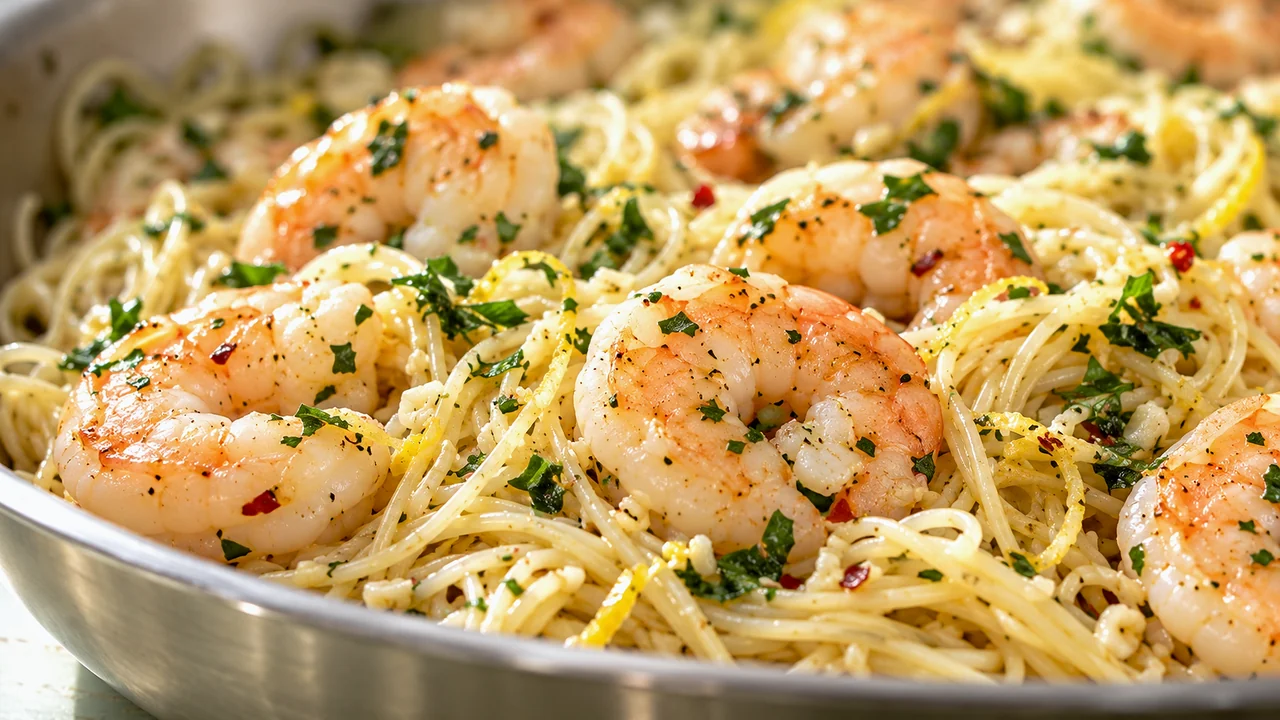
How to Make Shrimp Scampi with Angel Hair
1. Start the water first
Four quarts of water takes 10 minutes or more to boil, about the same time it takes to sear the shrimp and reduce the wine. Put the pot on before anything else. Keep the pasta out of the water until the sauce base is ready.
ADVERTISEMENT
2. Sear the shrimp in two batches
Even a 12-inch skillet can’t hold a pound and a half of shrimp in a single layer, and crowded shrimp release liquid and steam. Cook half at a time, turning each shrimp once. Take them out when they’re pink on the outside but still slightly translucent in the very center. They finish cooking when they go back into the sauce. Shrimp that curl into a tight “O” are overcooked and turn rubbery.
3. Keep the garlic pale and reduce the wine
Turn the heat down before the garlic goes in. In a hot pan, minced garlic goes from fragrant to bitter in seconds. Once you pour in the wine, scrape up the browned bits from the shrimp and let it bubble until it has reduced by about half. If the wine isn’t reduced enough, the finished sauce will taste sharp and come out watery. Take the skillet off the heat while the pasta cooks.
4. Cook the pasta a minute short and toss it right away
Pull the angel hair a minute before the package’s al dente time. Lift it straight from the pot into the skillet with tongs, or drain it quickly, but don’t rinse it. Add the butter, lemon, and pasta water, and toss constantly over medium heat. At first, the liquid looks thin and separate. Within a minute or two, it turns glossy and lightly coats every strand, with just a little loose sauce in the pan. The pasta keeps absorbing liquid, so if it starts to look dry or sticky, add another splash of pasta water.
5. Return the shrimp just to finish
Toss the shrimp back in with their juices for about a minute, only until they’re opaque all the way through. Add the parsley off the heat, taste for salt, and serve right away. Angel hair tightens up quickly as it sits.
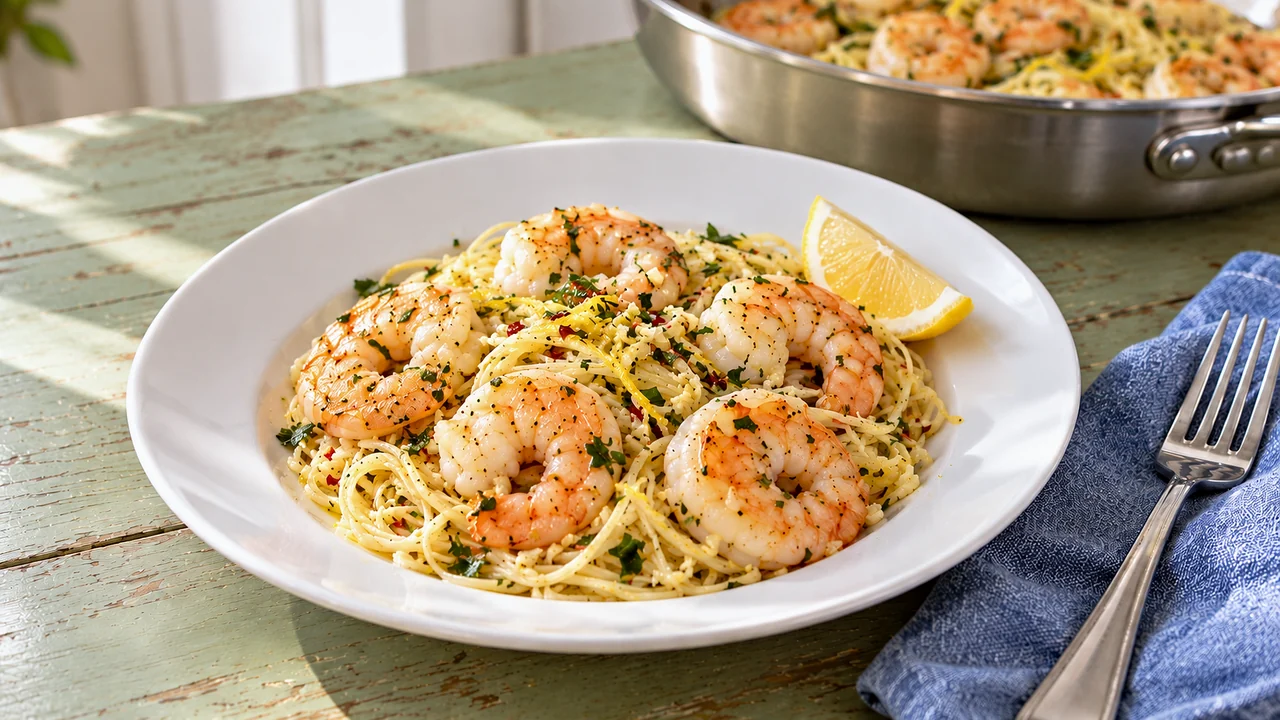
How to Tell When the Shrimp Are Done
Cooked shrimp are firm, with pearly, opaque flesh all the way through, and an instant-read thermometer in the thickest part should read 145°F. Pink shells or a pink surface alone don’t tell you the center is done. Cut one open if you’re unsure. Because the shrimp come out of the skillet slightly underdone and finish in the sauce, check one during that final toss.
ADVERTISEMENT
Tips for a Light, Silky Sauce
- Sauce watery? The wine probably wasn’t reduced enough, or too much pasta water went in. Keep tossing over medium heat for 30 to 60 seconds. The starch thickens the sauce as it bubbles.
- Sauce greasy or separated? The pan was too hot when the butter went in, or there wasn’t enough pasta water. Take the skillet off the heat, add 2 tablespoons of pasta water, and toss hard until it comes back together.
- Pasta dry or clumped? Angel hair absorbs liquid fast. Add hot pasta water, 1 to 2 tablespoons at a time, and serve as soon as the sauce coats the strands.
- Don’t add cream to fix it. A scampi sauce gets its body from the butter, starch, and reduced wine, not dairy. Pasta water and tossing solve almost every texture problem.
What to Serve with Shrimp Scampi
A crisp green salad, roasted asparagus or broccoli, and crusty bread for the last of the sauce all work well, with extra lemon wedges at the table. Grated Parmesan isn’t part of this sauce, but you can pass some at the table. For a creamy, spicier shrimp pasta, try our Cajun shrimp pasta. For a lighter shrimp dinner, our chili-lime shrimp quinoa bowls are built for meal prep. You’ll find more weeknight ideas in our dinner recipes.
Storage and Reheating
- Refrigerate: Refrigerate leftovers in an airtight container within 2 hours. They keep for 3 to 4 days, though the pasta and shrimp have the best texture within a day or two.
- Reheat: Warm portions in a skillet over medium-low heat with 2 to 3 tablespoons of water per serving, tossing, until hot throughout (165°F). Reheating firms up the shrimp, so take the pan off the heat as soon as everything is hot.
- Freezing: Not recommended. Thawed angel hair turns soft, and reheated frozen shrimp get rubbery.
Shrimp Scampi FAQ
Can I make shrimp scampi without wine?
Yes. Replace the wine with 1/2 cup low-sodium chicken or vegetable broth and 1 teaspoon more lemon juice, and reduce it the same way. Broth adds salt, so taste before adding more at the end.
Can I use frozen shrimp?
Yes. Thaw them overnight in the refrigerator. For a quicker thaw, seal them in a plastic bag and submerge it in cold water. Pat them very dry before seasoning, because thawed shrimp hold extra water.
Can I use linguine or spaghetti instead of angel hair?
Yes. Use the same 12 ounces and cook it 1 minute less than the package directions. Thicker pasta takes 9 to 11 minutes, so you can drop it into the water while the shrimp sear. Have the wine reduced by the time it’s ready.
Recipe Card
Shrimp Scampi with Angel Hair Pasta
Shrimp scampi with angel hair pasta: seared shrimp tossed with thin pasta in a light sauce of garlic, butter, reduced white wine, lemon, and starchy pasta water. No cream. Serves 6.
ADVERTISEMENT
Prep: 15 minutes | Cook: 20 minutes | Total: 35 minutes | Yield: 6 servings | Category: Dinner | Cuisine: Italian-American
Equipment: Large pot (at least 6 quarts), 12-inch skillet, tongs, liquid measuring cup, zester or fine grater
Ingredients
- 1 tablespoon kosher salt, for the pasta water
- 12 ounces angel hair pasta
- 1 1/2 pounds jumbo or extra-large raw shrimp (21/25 or 26/30 count), peeled and deveined
- 1/2 teaspoon kosher salt, plus more to taste
- 1/4 teaspoon freshly ground black pepper, plus more to taste
- 2 tablespoons extra-virgin olive oil, divided
- 5 tablespoons unsalted butter, divided
- 6 garlic cloves, minced
- 1/4 teaspoon red pepper flakes, plus more to taste
- 1/2 cup dry white wine, such as Pinot Grigio or Sauvignon Blanc
- Finely grated zest of 1 large lemon
- 3 tablespoons fresh lemon juice
- 1 cup reserved pasta water (about 1/2 cup is used)
- 1/3 cup chopped fresh flat-leaf (Italian) parsley
Instructions
- Boil the water: Bring 4 quarts of water to a boil in a large covered pot over high heat. Once it boils, add 1 tablespoon kosher salt. Keep it at a boil, but don’t add the pasta yet.
- Season the shrimp: Pat the shrimp very dry with paper towels. Toss them with 1/2 teaspoon salt and the pepper.
- Sear the shrimp in two batches: Heat 1 tablespoon oil and 1 tablespoon butter in a 12-inch skillet over medium-high heat until the butter foams. Add half the shrimp in a single layer and cook for 1 to 1 1/2 minutes per side, until pink outside but still slightly translucent in the center. Transfer to a plate. Repeat with the remaining 1 tablespoon oil, 1 tablespoon butter, and shrimp.
- Reduce the wine: Lower the heat to medium-low. Add the garlic and red pepper flakes to the fat in the skillet and cook, stirring, for 30 to 60 seconds, until fragrant but not browned. Pour in the wine, raise the heat to medium-high, and simmer for 2 to 3 minutes, scraping up the browned bits, until reduced by about half. Take the skillet off the heat.
- Cook the pasta: Add the angel hair to the boiling water and stir to separate the strands. Cook 1 minute less than the package directions for al dente, usually 2 to 3 minutes. Scoop out 1 cup of the pasta water, then drain the pasta without rinsing it.
- Toss the pasta in the sauce: Return the skillet to medium heat. Add the remaining 3 tablespoons butter, the lemon zest, lemon juice, pasta, and 1/2 cup of the reserved pasta water. Toss constantly with tongs for 1 to 2 minutes, until the butter melts into a glossy sauce that lightly coats the strands. If the pasta looks dry, add more pasta water, 1 to 2 tablespoons at a time.
- Finish with the shrimp: Add the shrimp and any juices from the plate and toss for about 1 minute, until the shrimp are opaque throughout (145°F). Take the skillet off the heat and toss in the parsley. Taste, season with more salt, pepper, or red pepper flakes, and serve immediately.
Notes
- Sear the shrimp in two batches so they brown instead of steaming.
- Angel hair finishes cooking in the skillet, so cook it 1 minute less than the package says and toss it into the sauce right away.
- Salt amounts are for Diamond Crystal kosher salt. With Morton kosher salt, use about half.
- No wine: use 1/2 cup low-sodium chicken or vegetable broth plus 1 teaspoon more lemon juice.
Storage
- Refrigerate within 2 hours; keeps 3 to 4 days (best texture within 1 to 2 days).
- Reheat in a skillet with 2 to 3 tablespoons water per serving until hot throughout (165°F).
- Freezing is not recommended.
ADVERTISEMENT