ADVERTISEMENT
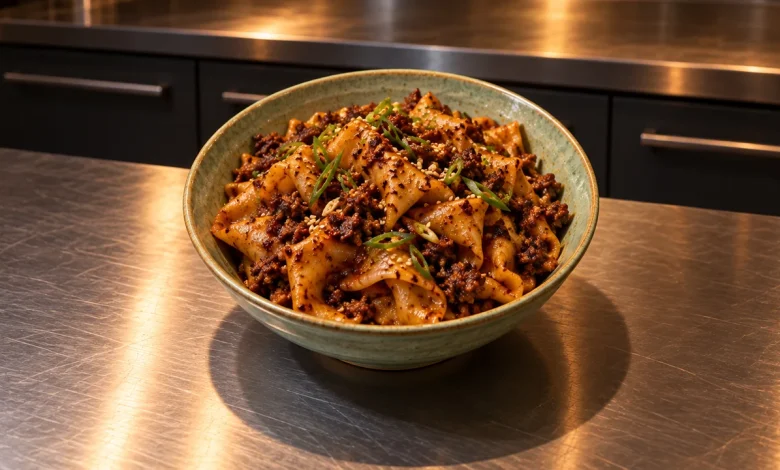
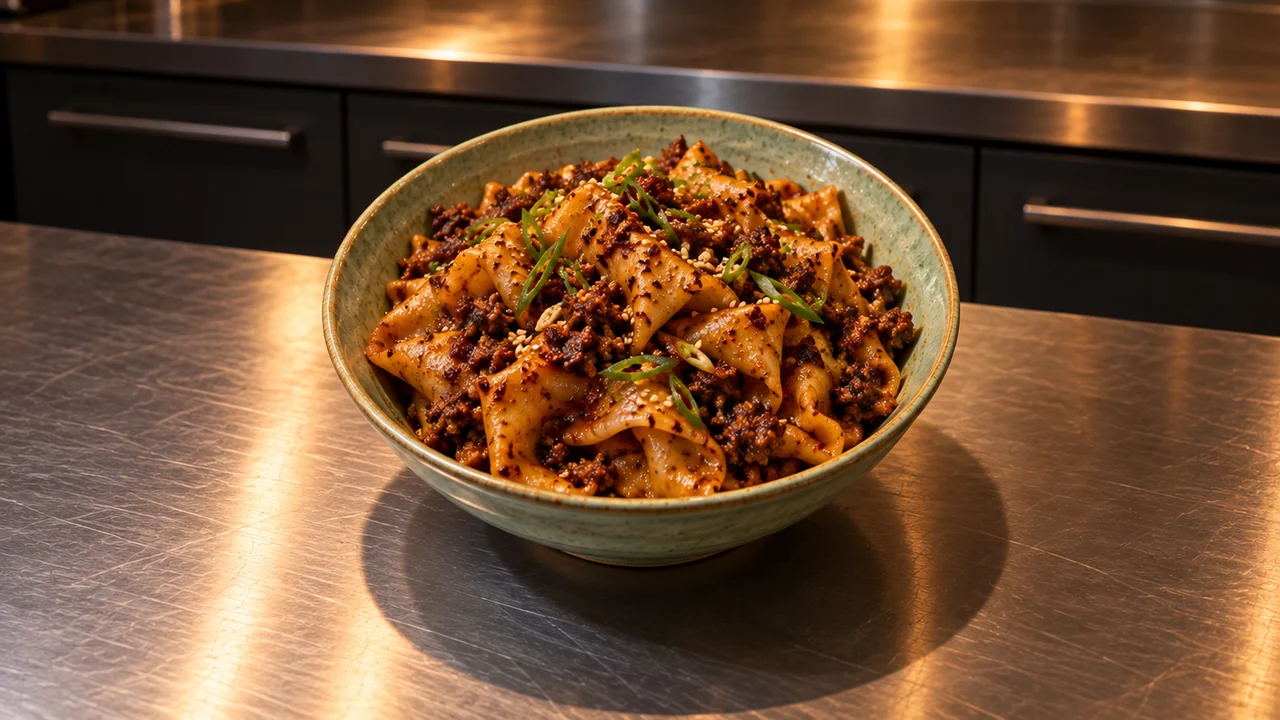
Biang biang noodles are the broad, belt-like wheat noodles of Shaanxi province in northwest China, traditionally pulled by hand and slapped against the counter as they stretch. This home version takes a shortcut: packaged wide wheat noodles tossed with crispy ground pork in a dark, tangy chili-soy sauce. Packaged noodles are a substitute, not the hand-pulled original, and this is a weeknight interpretation rather than a traditional recipe. What it keeps is the idea: chewy, wide ribbons, a sauce built on soy, black vinegar, and chili oil, and plenty of scallion. It serves 4.
The Short Version
Put a big pot of water on before anything else. While it heats, mix the sauce and prep the aromatics. The pork goes into a hot wok and is left alone long enough to form a real brown crust, then gets broken into uneven crumbles. Aromatics, chili crisp, and sauce follow, then the noodles and a splash of their cooking water. One minute of tossing and the sauce turns from a puddle into a glossy coating.
Ingredients That Matter
Noodles: Look for packages labeled biang biang, Shaanxi, knife-cut, or simply wide wheat noodles, about 3/4 to 1 1/4 inches wide. Brands vary a lot. Fresh and semi-fresh noodles from the refrigerated case can cook in 2 to 4 minutes; dried ones can take 6 to 12. Follow your package and start tasting a minute early. Twelve ounces of dried noodles is enough for 4; if yours are fresh, use about 1 pound.
Ground pork: Regular ground pork (around 80% lean) browns and crisps best. If a lot of fat renders out, spoon off all but about 2 tablespoons before the aromatics go in.
ADVERTISEMENT
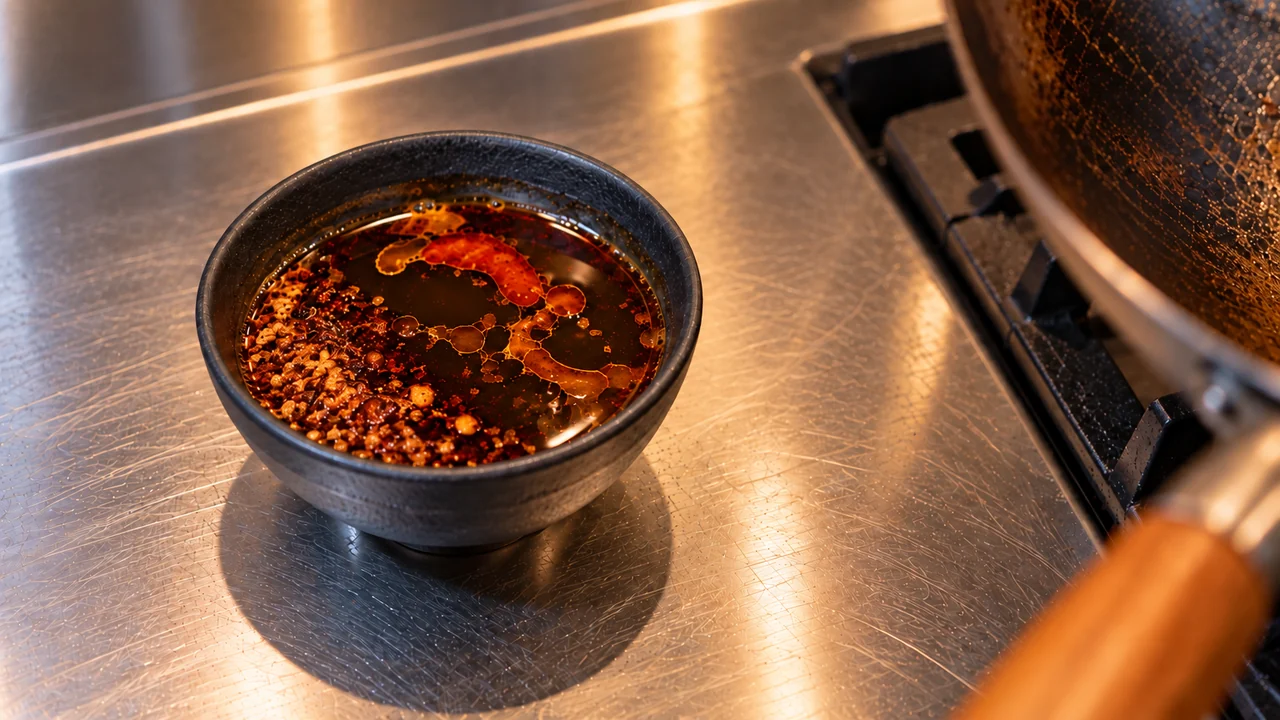
The sauce: Light soy sauce brings the salt; a tablespoon of dark soy sauce adds color and a deeper, less salty flavor. Chinese black vinegar (Chinkiang) is malty and mellow, not sharp like white vinegar. Oyster sauce, a little brown sugar, and sesame oil round it out, and chili oil adds heat and a red sheen.
Chili crisp and Sichuan pepper: Chili crisp is crunchy fried chili, garlic, and shallot in oil. One tablespoon of chili crisp plus one of chili oil gives a moderate, steady heat. Ground Sichuan pepper is optional; it adds a tingling, numbing quality rather than more heat.
Salt check: Between the soy sauces, oyster sauce, and chili crisp, the sauce carries plenty of salt. Salt the noodle water lightly or not at all, since some of that water goes into the wok.
How to Make Biang Biang Noodles
Brown the pork without touching it
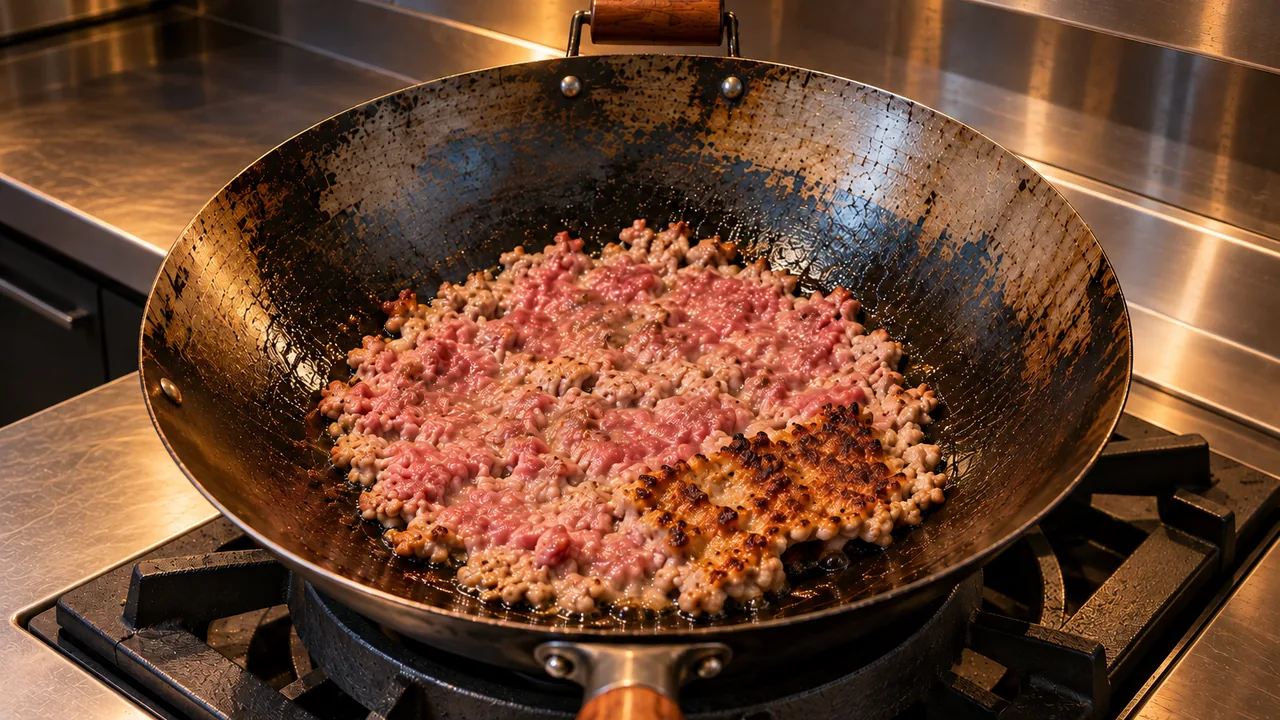
Heat the oil in a wok over high heat until it shimmers. Add the pork, press it into a single flat layer, and leave it for 2 to 3 minutes, until the underside is deep brown and crisp. Moving it early makes it steam in its own juices instead of browning.
Break it up, then add the aromatics
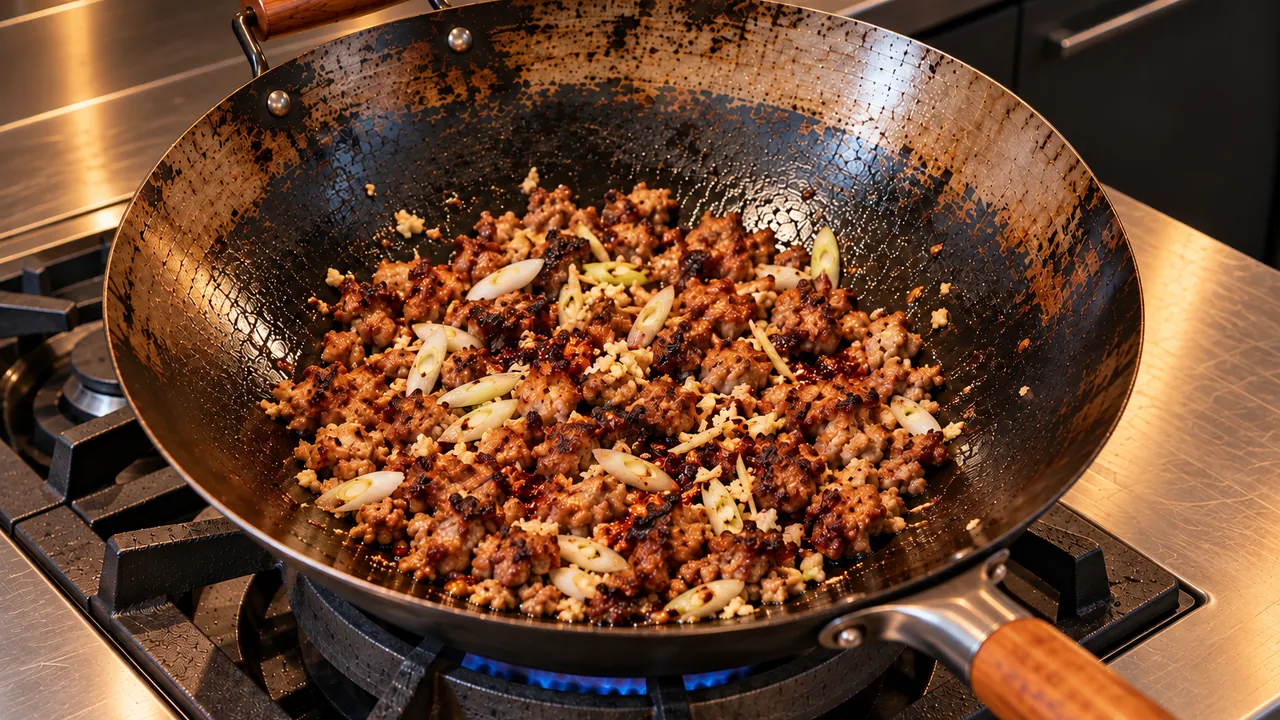
Flip the pork in sections and break it into irregular crumbles, some small and some larger, and cook for 3 to 4 minutes more, until no pink remains and it reaches 160°F. Drain off excess fat if needed. Add the garlic, ginger, and scallion whites and stir for 30 seconds, then add the chili crisp and Sichuan pepper and stir for another 15 seconds. Keep it moving so the garlic doesn’t scorch.
ADVERTISEMENT
Sauce, noodles, toss
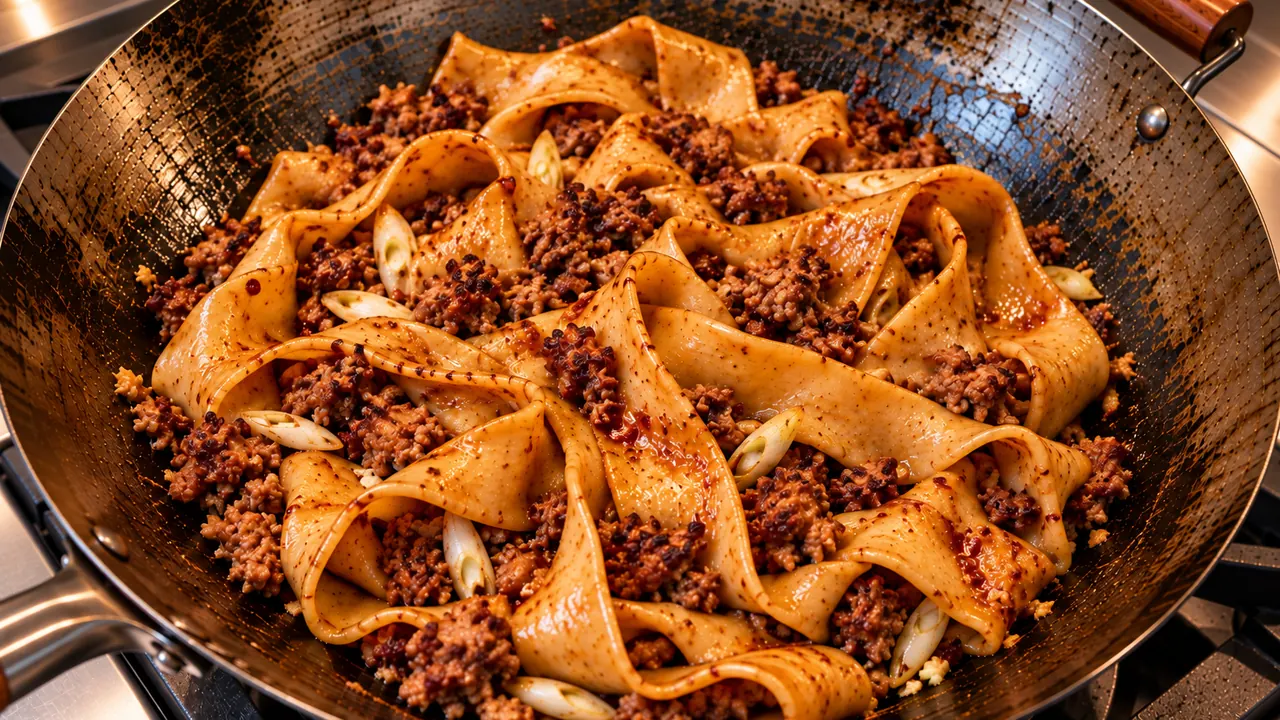
Time the noodles to finish now. Reserve about 1/2 cup of their cooking water, then drain. Pour the sauce into the wok and let it bubble for about 30 seconds. Add the noodles and 1/3 cup of the reserved water and toss with tongs or a wok spatula for 1 to 2 minutes over medium-high heat. The starch in the water thickens the sauce so it clings to every ribbon. The finished wok should look glossy, with no pool of thin sauce left in the bottom; if it looks dry, add more water a tablespoon at a time. Turn off the heat and scatter over the scallion greens and sesame seeds.
Adjusting Heat and Seasoning
- Milder: Use chili crisp only for its crunch (1 to 2 teaspoons) and replace the chili oil with neutral oil.
- Hotter: Serve extra chili oil at the table instead of adding more to the wok, so everyone can choose.
- Too salty: Add a splash more noodle water and a few drops of black vinegar.
- Flat: A teaspoon more black vinegar usually fixes it.
Serving and Leftovers
Serve right away, while the noodles are springy. Wide wheat noodles firm up as they cool. Refrigerate leftovers within 2 hours and use within 3 days. Reheat in a hot skillet or wok with a tablespoon or two of water, tossing until steaming hot. Freezing isn’t recommended; the noodles turn soft and break.
If you like noodles from the wok, try our chicken chow mein with pan-crisped egg noodles, or the curry-scented Singapore noodles with rice vermicelli. Find more weeknight dinners in our dinner recipes.
Biang Biang Noodle FAQ
Are these traditional biang biang noodles?
No. Traditional biang biang noodles are hand-pulled from fresh dough, and the classic topping is often hot oil poured over chili flakes, garlic, and scallions. This is a home-style interpretation with packaged noodles and crispy pork.
What can I use if I can’t find wide wheat noodles?
Any wide, flat wheat noodle sold in Asian markets works, including knife-cut noodles. The texture changes with thinner noodles, and the sauce coats them differently.
ADVERTISEMENT
Why add noodle water to the sauce?
It carries starch from the noodles, which thickens the sauce slightly and helps it stick instead of sliding to the bottom of the wok.
Recipe Card
Biang Biang Noodles with Crispy Pork
A home-style biang biang noodles with packaged wide wheat noodles, crispy browned ground pork, and a soy, black vinegar and chili oil sauce, finished with scallions and sesame. Serves 4.
Prep: 15 minutes | Cook: 20 minutes (including boiling the water) | Total: 35 minutes | Yield: 4 servings | Category: Dinner | Cuisine: Chinese-inspired
Equipment: 14-inch wok or large skillet, large pot, tongs
Ingredients
- 12 ounces dried wide biang biang or wide wheat noodles (about 1 pound if fresh)
- 1 pound ground pork
- 2 tablespoons neutral oil
- 4 garlic cloves, minced
- 1 tablespoon grated fresh ginger
- 4 green onions, whites and greens sliced separately
- 1 tablespoon chili crisp
- 1 teaspoon ground Sichuan pepper (optional)
- 1 tablespoon toasted sesame seeds
- 3 tablespoons light soy sauce
- 1 tablespoon dark soy sauce
- 2 tablespoons Chinese black vinegar
- 1 tablespoon oyster sauce
- 1 tablespoon chili oil
- 2 teaspoons brown sugar
- 1 teaspoon toasted sesame oil
- 1/3 cup reserved noodle cooking water, plus more as needed
Instructions
- Mix the sauce: Bring a large pot of water to a boil (salt it lightly or not at all). Stir the light and dark soy sauces, black vinegar, oyster sauce, chili oil, brown sugar, and sesame oil until the sugar dissolves.
- Cook the noodles: Cook the noodles according to the package, tasting a minute early, so they finish when the pork is ready. Reserve about 1/2 cup of the cooking water, then drain.
- Brown the pork: Heat the oil in a wok over high heat. Add the pork in one flat layer and cook undisturbed 2 to 3 minutes, until deeply browned underneath.
- Crumble and cook through: Break the pork into irregular crumbles and cook 3 to 4 minutes more, until no pink remains (160°F). Spoon off excess fat, leaving about 2 tablespoons.
- Add aromatics: Add the garlic, ginger, and scallion whites and stir 30 seconds. Add the chili crisp and Sichuan pepper and stir 15 seconds.
- Add the sauce: Pour in the sauce and let it bubble about 30 seconds.
- Toss with noodles: Add the noodles and 1/3 cup reserved water. Toss over medium-high heat 1 to 2 minutes, until the sauce clings with no pool left; add more water by the tablespoon if dry.
- Finish: Turn off the heat, top with the scallion greens and sesame seeds, and serve right away.
Notes
- Packaged wide wheat noodles are a substitute for traditional hand-pulled biang biang noodles; cooking times vary widely by brand.
- The sauce is salty; salt the noodle water lightly or not at all.
- For less heat, use 1 to 2 teaspoons chili crisp and replace the chili oil with neutral oil.
Storage
- Refrigerate within 2 hours and use within 3 days.
- Reheat in a hot skillet with 1 to 2 tablespoons water until steaming hot.
- Freezing is not recommended.
ADVERTISEMENT